
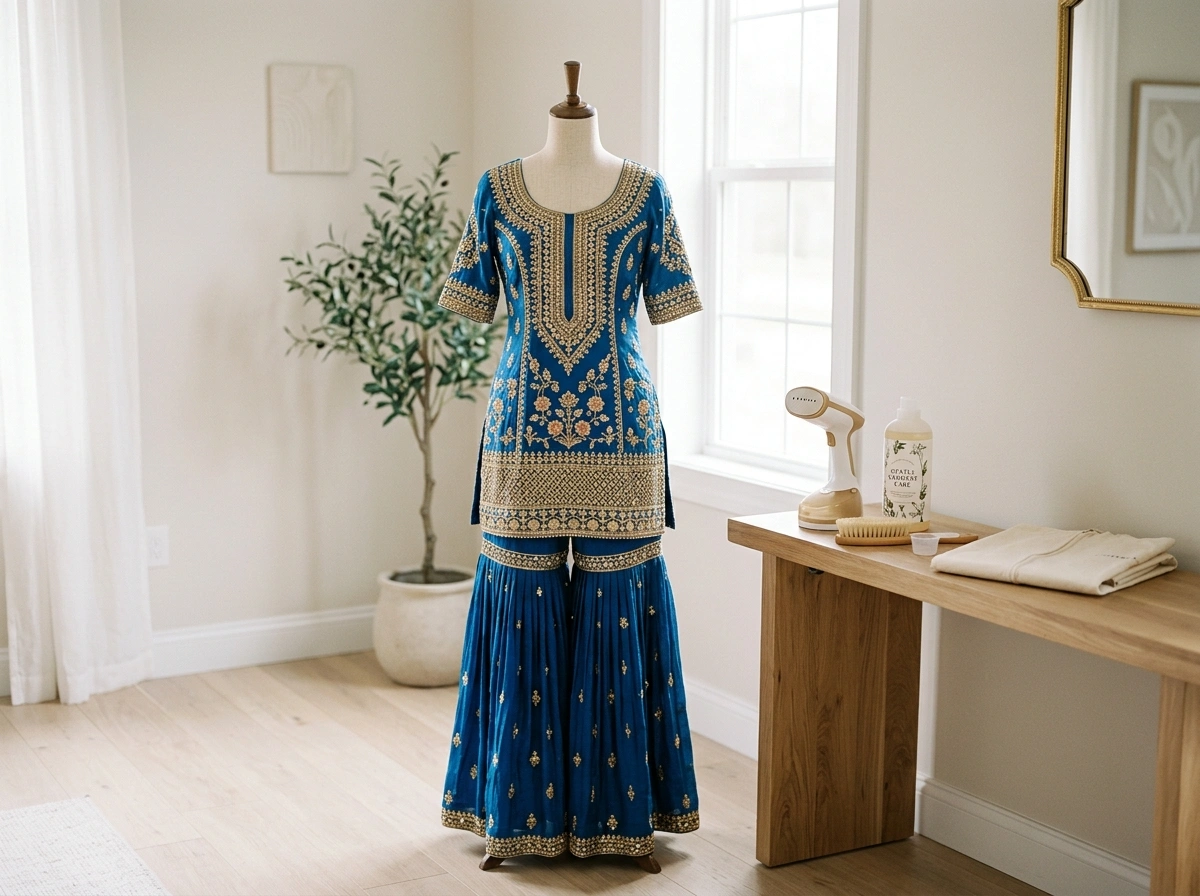
A sharara is more than just an outfit. It’s a statement piece, often worn for weddings, festivals, and other special moments that you want to remember for years. With its flowing flared legs, intricate embroidery, and rich fabrics, a sharara deserves thoughtful care. The good news? Keeping yours fresh and vibrant doesn’t require fancy equipment or professional help every time. With the right habits, you can protect your investment and enjoy it season after season.
Here’s a complete guide to caring for your sharara so it always looks as good as the day you bought it.
Understand Your Fabric Before You Do Anything
The first rule of sharara care is simple: know what you’re working with. Sharara dresses come in a wide range of fabrics, and each one has different needs. Georgette, chiffon, silk, velvet, net, and cotton all behave differently when exposed to water, heat, and friction.
Before you wash or store your outfit, check the care label inside the garment. If there’s no label, treat the piece as delicate by default. Heavier fabrics like velvet and silk tend to need professional cleaning, while lighter cotton or blended pieces can often handle gentle home care. When you shop for a quality sharara dress, ask about the fabric composition so you can plan your care routine from the start.
Knowing your fabric saves you from costly mistakes, like shrinking a delicate net layer or fading delicate hand embroidery.
Washing Your Sharara the Right Way
Washing is where most damage happens, so slow down and be gentle. Whenever possible, choose hand washing over machine washing for embellished or delicate shararas.
For hand washing:
- Fill a clean basin with cold or lukewarm water.
- Add a small amount of mild detergent made for delicate fabrics.
- Submerge the garment and gently swish it around for a minute or two.
- Avoid scrubbing, wringing, or twisting, which can stretch the fabric and loosen embroidery.
- Rinse thoroughly with cool water until all soap is gone.
If you must machine wash a sturdy cotton or blended sharara, place it inside a mesh laundry bag, select the gentle cycle, and use cold water. Skip the heavy spin setting to reduce stress on the fabric.
A quick tip: always turn the outfit inside out before washing. This protects the outer surface, embroidery, and any prints from rubbing against other items.
Handle Stains With Care
Spills happen, especially at events with food and drinks. The key is acting fast without panicking. Blot the stain gently with a clean, damp cloth. Never rub, as that can push the stain deeper into the fibers and spread it further.
For stubborn spots, use a tiny amount of mild detergent diluted in water and dab it on the area. Test any cleaning solution on a hidden part of the garment first, like an inner seam, to make sure it won’t cause discoloration. For oil-based stains or marks on silk and velvet, it’s safest to take the piece to a professional cleaner who understands delicate fabrics.
Drying: Skip the Dryer
Heat is the enemy of delicate ethnic wear. A clothes dryer can shrink fabric, fade colors, and weaken embroidery threads. Always air dry your sharara instead.
Lay lighter fabrics flat on a clean towel, or hang them on a padded hanger away from direct sunlight. Direct sun can cause vivid colors to fade over time, so a shaded, well-ventilated spot is ideal. For heavier pieces, hanging them while damp can stretch the fabric, so flat drying works better.
Make sure the garment is completely dry before storing it. Even slight dampness can lead to mildew, musty odors, and fabric damage.
Ironing and Steaming Without Damage
A crisp, wrinkle-free sharara instantly looks more polished. But ironing requires attention, especially around embellished areas.
Always check the recommended heat setting for your fabric. Silk, chiffon, and georgette need low heat, while cotton can handle higher temperatures. To protect the surface, place a thin cotton cloth between the iron and the garment. This barrier prevents scorching and shine marks.
Never run a hot iron directly over sequins, beads, stones, or zari work. The heat can melt or warp embellishments. Instead, iron around these areas or flip the garment inside out.
For delicate or heavily decorated pieces, a handheld steamer is your best friend. Steaming removes wrinkles gently without direct contact, keeping embroidery and beadwork safe.
Caring for Embellishments and Embroidery
The intricate detailing is what makes a sharara special, so it deserves extra attention. Sequins, beads, mirror work, and zari embroidery are beautiful but fragile.
Here are a few habits that protect them:
- Store the outfit inside out to reduce friction on the embellished surface.
- Avoid hanging heavy embroidered pieces for long periods, since the weight can pull threads loose.
- Repair loose beads or threads promptly before they unravel further.
- Keep sharp objects, jewelry, and rough surfaces away from the fabric.
If a section of embroidery comes undone, take it to a skilled tailor rather than attempting a complicated fix yourself.
Smart Storage Keeps It Fresh
How you store your sharara matters just as much as how you clean it. Poor storage leads to wrinkles, discoloration, and even pest damage.
Follow these storage best practices:
- Use breathable cotton or muslin garment bags instead of plastic covers, which trap moisture and can yellow the fabric.
- Store the outfit in a cool, dry, dark place away from humidity.
- Add silica gel packets to absorb excess moisture and prevent mildew.
- Place cedar blocks or natural moth repellents nearby to protect against insects.
- Fold heavily embellished pieces with acid-free tissue paper between layers to prevent creasing and snagging.
Avoid cramming your sharara into a tightly packed closet. Giving it space prevents unnecessary wrinkles and lets the fabric breathe.
Refresh Between Wears
You don’t need to wash your sharara after every single wear, especially if you only had it on for a few hours. Frequent washing actually shortens a garment’s life.
Instead, air it out in a shaded, ventilated space to remove any odors. Spot-clean small marks rather than washing the whole piece. A quick steam can refresh the look and remove light wrinkles, leaving it ready for the next occasion.
When to Call a Professional
Some situations call for expert help. Heavily embellished bridal shararas, silk and velvet fabrics, set-in stains, and delicate vintage pieces are all best handled by a trusted dry cleaner. Choose one with experience in ethnic and embellished wear, and always point out specific stains or fragile areas so they can take precautions.
Professional care costs a little more, but it can save an expensive outfit from permanent damage.
Conclusion
Your sharara is a treasured piece worth protecting. With a little attention to fabric type, gentle washing, careful drying, smart ironing, and thoughtful storage, you can keep it looking brand new for years. Treat the embellishments with care, refresh the garment between wears, and lean on professional cleaners when needed.
A few mindful habits go a long way. By following these tips, your sharara will stay vibrant, elegant, and ready for every celebration that comes your way.
